Emergency Gadgets for Remote Coastal Trails
Simple, reliable safety equipment for exploring the quieter coastal paths and headlands of Swansea Bay and Gower.
Coastal walking often feels accessible and familiar, but some routes pass through remote or exposed places with limited mobile coverage, tidal hazards and changing weather.
This guide explains the practical equipment that can help with communication, navigation, visibility and decision-making when a walk does not go to plan.
Why Carry Emergency Equipment?
The purpose of emergency equipment is not to make an unsuitable route safe. It is to help you respond more effectively when something unexpected happens during a properly planned walk.
Gower's coastline includes sheltered beaches, woodland paths and relatively accessible visitor destinations. It also contains isolated coves, exposed headlands and routes where assistance may not be immediately available.
A fall, sudden change in weather, unexpected delay or loss of mobile coverage can turn a straightforward outing into a more difficult situation.
Reliable emergency equipment supports communication and self-sufficiency, but it must be matched to the route and used alongside proper planning, suitable clothing and current safety information.
The most useful equipment is reliable, straightforward to operate under stress, appropriate for UK emergency systems and realistic to carry on ordinary walks.
Battery life, weather resistance, weight and whether the user understands how the device works are more important than unnecessary technical features.
What Emergency Equipment Do You Actually Need?
A simple set of essentials is the starting point. Consider additional communication equipment only when the route, isolation or activity creates a genuine need.
The Basic Coastal Walking Kit
For many ordinary day walks, prioritise the following:
A charged mobile phone, dependable navigation, a whistle, suitable torch, basic first aid and essential personal medication.

Clothing, food and water appropriate for the walk remain equally important.
Add More Resilience
Longer outings may justify additional supplies and independent backup equipment.
Consider a portable charger, spare batteries, backup lighting, emergency shelter and a paper map with appropriate navigation skills.
Plan how to request assistance if mobile coverage becomes unreliable.
Consider Satellite Communication
Walkers who frequently visit places beyond mobile coverage may benefit from a dedicated satellite messenger or personal locator beacon.
These devices differ significantly in capabilities, registration, subscription costs and operating requirements.
They are not a routine requirement for every Gower walk.
Begin with reliable, inexpensive essentials and learn to use them.
A whistle that is accessible, a working torch and a properly prepared phone may offer more practical value than carrying specialist technology without understanding its limitations.
Emergency Gadgets at a Glance
| Equipment | Main Purpose | Main Advantage | Important Limitation |
|---|---|---|---|
| Whistle | Attract attention | Lightweight and battery-free | Needs someone within hearing distance |
| Head Torch | Provide hands-free lighting | Useful during delays or low light | Depends on available battery power |
| Mobile Phone | Call emergency services and share location | Familiar and widely available | Requires battery and usable connectivity |
| Power Bank | Recharge compatible devices | Extends available battery capacity | Cannot create mobile coverage |
| Satellite Messenger | Off-grid messaging and SOS | May work beyond mobile networks | Coverage, subscription and device requirements |
| 406MHz Personal Locator Beacon | Transmit a distress alert | Dedicated satellite rescue alerting | Emergency-only; no ordinary two-way conversation |
| Weather / Navigation Tools | Support informed decisions | Help anticipate and avoid hazards | Forecasts and digital information can become outdated |
Practical Safety Equipment for Coastal Walkers
Emergency Whistle
An emergency whistle is one of the simplest and lightest pieces of safety equipment you can carry.
It can attract attention when shouting is difficult, particularly if you are injured or need to alert somebody nearby.
Mountain Rescue England and Wales describes a recognised distress signal of six long whistle blasts in one minute, followed by a minute's pause and repeated signalling.
Choose a dependable whistle, keep it accessible and understand that its effectiveness depends on somebody being able to hear it.
Head Torch & Backup Lighting
A head torch provides hands-free illumination when daylight is limited or a walk takes longer than expected.
Check the battery before leaving and carry suitable spare power where necessary.

A small independent backup light can be particularly valuable on longer outings.
A torch does not make narrow cliff paths or tidal crossings safe after dark. Plan to finish exposed coastal walks in daylight wherever possible.
Charged Mobile Phone
For many coastal walkers, a mobile phone is the primary means of requesting help in an emergency.
Start with a fully charged battery and protect the phone from moisture and damage.
The RNLI recommends keeping a phone in a waterproof pouch and carrying it somewhere accessible.
Mobile coverage can be unreliable in isolated areas. If your normal network is unavailable, still try calling 999 or 112; another available network may carry the emergency call.
However, where no mobile network can be reached, an ordinary cellular call cannot connect.
Power Bank & Spare Batteries
A portable charger can provide additional battery capacity for a compatible phone, GPS device or rechargeable torch.
It can be useful on longer outings where navigation and photography place additional demands on a phone battery.
A small charger is often enough for ordinary day walking. Larger batteries may be justified for camping or multi-day trips.
Remember that backup power does not improve phone reception or guarantee that emergency services can be contacted.
First-Aid Kit & Emergency Shelter
A compact first-aid kit is useful for dealing with minor injuries during a walk.
Include appropriate dressings and essential medication, and learn the basic first-aid skills relevant to your activities.
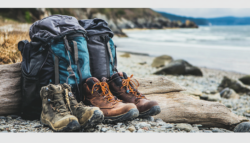
On longer or more remote outings, an emergency survival bag or suitable lightweight shelter may help provide protection while awaiting assistance.
Such equipment should not replace warm clothing, good route choices or the need to contact emergency services when necessary.
Offline Maps & Backup Navigation
Understanding your position and the surrounding landscape is an important part of managing unexpected circumstances.
Download suitable offline maps before leaving home and carry a paper map and compass where appropriate.
Learn how to read grid references and identify significant landmarks around your intended route.
In an emergency, being able to communicate an accurate location can help the response team find you.
Satellite Messengers & Personal Locator Beacons
More remote routes sometimes justify a backup means of communication that does not rely on ordinary mobile phone coverage. However, satellite devices are not all the same.
Messaging & Emergency SOS
Satellite communicators can provide off-grid messaging, location sharing and emergency SOS functions, depending on the device and service.
Some support two-way messaging, allowing information to be exchanged with a response centre or chosen contacts.
Consider: Satellite coverage, subscription requirements, battery life, operating procedures and whether the service is available in the UK.
These devices can be valuable for frequent remote travel but are not automatically necessary for ordinary Gower day walks.
Dedicated Distress Alerting
A personal locator beacon (PLB) is designed to transmit a distress signal through a recognised satellite search-and-rescue system.
A conventional PLB is not an ordinary messaging device and does not provide a two-way text conversation.
The beacon must be appropriately registered, maintained and used according to its instructions.
Consider: Manual activation, antenna positioning, battery replacement dates, registration and the circumstances in which an emergency alert should be sent.
UK 406MHz Beacon Registration →Some compatible smartphones provide emergency satellite communication when ordinary mobile networks are unavailable.
These features depend on the specific phone model, supported country, software, satellite access and a suitable view of the sky.
Check whether your phone supports the service in the UK, learn its operating procedure and test any available demonstration before a remote trip.
A satellite messenger, conventional PLB and satellite-enabled smartphone are not interchangeable.
Before relying on any specialist device, confirm exactly what it does, how an alert is received, whether an active service plan is required and what happens after activation.
Never activate an emergency beacon merely to test the rescue response. Follow the manufacturer's approved self-test procedure.
Weather Awareness & Location Tools
The most useful safety technology is often the equipment that helps you recognise a potential problem before it becomes an emergency.
Weather Forecasts & Alerts
Check the latest forecast before setting out and review conditions relevant to your intended route.
Strong winds, heavy rain and poor visibility may make exposed coastal walking unsuitable.
A weather app is useful, but saved forecasts may become outdated without fresh data.
Met Office Forecasts →Tide Information
Tide forecasts help identify periods when beaches, causeways and estuary locations may be affected by rising water.
Use information appropriate for the location, allow a generous safety margin and follow local warning signs.
A navigation track or downloaded tide table cannot guarantee a safe crossing.
Tide Times & Beach Safety →GPS Position & Grid References
Accurate location information is useful when contacting emergency services.
Learn how to display coordinates or a grid reference using your navigation equipment.
Location-sharing applications can be helpful, but they do not replace an emergency call or guarantee communication without a network.
Navigation Tools Guide →Where Extra Preparation Matters on Gower
These examples illustrate the importance of different safety considerations around the peninsula. They are not suggestions to explore hazardous areas or attempt unsuitable crossings.
Rhossili Down & Worm's Head
Exposed headlands and the tidal causeway at Worm's Head create different hazards from an ordinary beach walk.
Weather awareness, route planning and understanding tidal restrictions are essential. A phone or emergency beacon does not make an unsafe crossing acceptable.
Bishopston Valley & Pwll Du Bay
Woodland paths and the relatively secluded location of Pwll Du make route awareness and communication planning worthwhile.
Carry a charged phone, offline mapping and suitable supplies for the distance and terrain.
Consider how you would return safely if the original plan became unsuitable.
Whiteford Sands & North Gower
North Gower's dunes, saltmarshes and tidal estuary landscape require particular attention to safe access routes.
Avoid exposed mudflats and tidal ground. Carry reliable navigation and ensure somebody knows your planned route and return time.
Emergency devices support an outing, but route selection should reflect walking ability, weather, conditions and available daylight.
How to Request Help in a Coastal Emergency
The equipment you carry matters, but knowing who to contact and what information to provide is equally important.
Ask for the Coastguard
If someone is in danger at the coast, on cliffs or in the sea, call emergency services and ask for the Coastguard.
Explain the nature of the emergency, your location, the number of people involved and any immediate hazards.
Stay on the line and follow the call handler's instructions. Do not put yourself in further danger attempting a rescue.
If Mobile Reception Is Poor
Try 999 or 112 even if your normal mobile provider has no service. Another available network may carry the emergency call.
If no network is available, a conventional mobile call cannot connect. Supported satellite SOS devices may provide a separate option.
Move only if it is safe to do so and follow any instructions from emergency services.
If You Are Lost or Injured Inland
For a mountain or remote inland rescue emergency, Mountain Rescue England and Wales advises calling 999 or 112, asking for the Police and requesting Mountain Rescue.
At the coast, ask for the Coastguard instead. The emergency services will coordinate the appropriate response.
Mountain Rescue Safety Advice →The UK's emergencySMS service is primarily designed for people with speech or hearing difficulties and requires advance registration.
It should not be treated as a general substitute for an emergency voice call, and ordinary SMS still depends on network connectivity.
If this service is relevant to your accessibility needs, register before an emergency arises.
Coastal Safety Equipment Checklist
Adapt these checks to the route, weather, walking conditions and needs of the people travelling.
Equipment & Communication
- Charged phone with emergency calling available
- Suitable navigation and offline maps
- Whistle and dependable lighting
- First-aid supplies and essential medication
- Waterproof protection for electronic equipment
- Backup batteries or charging where appropriate
- Specialist communication device checked, if carried
Route & Conditions
- Weather forecast and warnings checked
- Tide times checked where relevant
- Walking route and alternatives understood
- Enough daylight allowed for the return
- Suitable clothing, food and water packed
- Access restrictions and diversions checked
- Someone knows your plans and expected return
Before a longer or remote walk, let someone know the route you intend to follow, where you expect to finish and approximately when you plan to return.
If your plans change, update them when practical. This simple habit can be more useful than carrying additional gadgets without a clear safety plan.
Emergency Equipment FAQs
What emergency equipment should I carry on a Gower coastal walk?
For many day walks, a charged phone, navigation, whistle, suitable light, first-aid supplies and appropriate clothing provide a sensible starting point. Adapt the kit to the route and conditions.
Will 999 work without mobile signal?
If your own network is unavailable, an emergency call may use another network that has coverage. But if no usable mobile network is available, a standard mobile call cannot connect. Satellite emergency systems are different and require compatible equipment.
Do I need a personal locator beacon?
Usually not for ordinary coastal day walks. A PLB may be worth considering for more isolated activities where mobile coverage is unlikely and a dedicated emergency distress alert is appropriate. It requires proper registration and familiarity.
Is a satellite messenger the same as a PLB?
No. Satellite messengers may offer two-way messages, tracking and an SOS service, often subject to a subscription. A conventional 406MHz PLB is designed for dedicated distress alerting, not routine messaging.
Are weather apps and GPS enough to make tidal routes safe?
No. Weather forecasts and GPS devices support planning but cannot guarantee that a tidal route is safe or currently accessible. Follow official guidance, current warnings and safe route choices.
Can a power bank replace an emergency beacon?
No. A power bank provides battery power for compatible devices. It does not create mobile reception or transmit a dedicated satellite distress signal by itself.
More Gear Guides for Coastal Walking
Navigation Tools
Compare paper maps, smartphone apps, GPS devices and offline navigation for Gower walking routes.
Read the Navigation Guide →Head Torches
Explore beam patterns, brightness, weather resistance and dependable lighting for early starts or late finishes.
Read the Head Torch Guide →Portable Chargers
Understand power bank capacity, device compatibility and backup charging for outdoor trips.
Read the Charger Guide →The Ultimate Walking Checklist
Review equipment, clothing, navigation and essential preparation before your next coastal walk.
View the Walking Checklist →Outdoor Gear & Packing
Explore a broader packing guide covering coastal walks, beach visits and camping.
Read the Packing Guide →Walking & Hiking Routes
Browse established Gower walking routes and choose a walk suited to your experience and the conditions.
Explore Walking Routes →UK Coastal Safety & Emergency Guidance
These official resources provide further information on walking safety, emergency communication and specialist rescue equipment.
RNLI — Coastal Walking Safety
Safety advice covering cliffs, tidal hazards, communication and preparation for coastal walks.
Read RNLI Guidance →HM Coastguard — Emergency Help
Official guidance on requesting help in a coastal emergency and providing useful information.
Read Coastguard Guidance →Mountain Rescue — Safety Advice
Guidance on walking preparation, emergency equipment, route planning and inland rescue requests.
Read Mountain Rescue Advice →UK Government — Beacon Registration
Official information about registering a 406MHz personal locator beacon and maintaining its registration details.
Register a UK Beacon →